Introduction
India has emerged as one of the world’s fastest-growing economies, offering strong opportunities for startups, SMEs, and foreign investors. With a structured legal framework, transparent digital systems, and investor-friendly policies, registering a business in India has become a streamlined and time-bound process.
This article explains how to register a business in India, available structures, documentation, timelines, and key compliance requirements.
1. Types of Business Structures in India
| Structure | Suitable For | Key Features |
|---|---|---|
| Private Limited Company | Startups, funded businesses, foreign investors | Separate legal entity, scalable |
| Limited Liability Partnership (LLP) | Professionals, small businesses | Lower compliance |
| One Person Company (OPC) | Solo entrepreneurs | Limited ownership |
2. Who Can Register a Business in India
-
Indian residents
-
Non-resident Indians (NRIs)
-
Foreign nationals
-
Overseas companies (through subsidiary / branch / liaison office
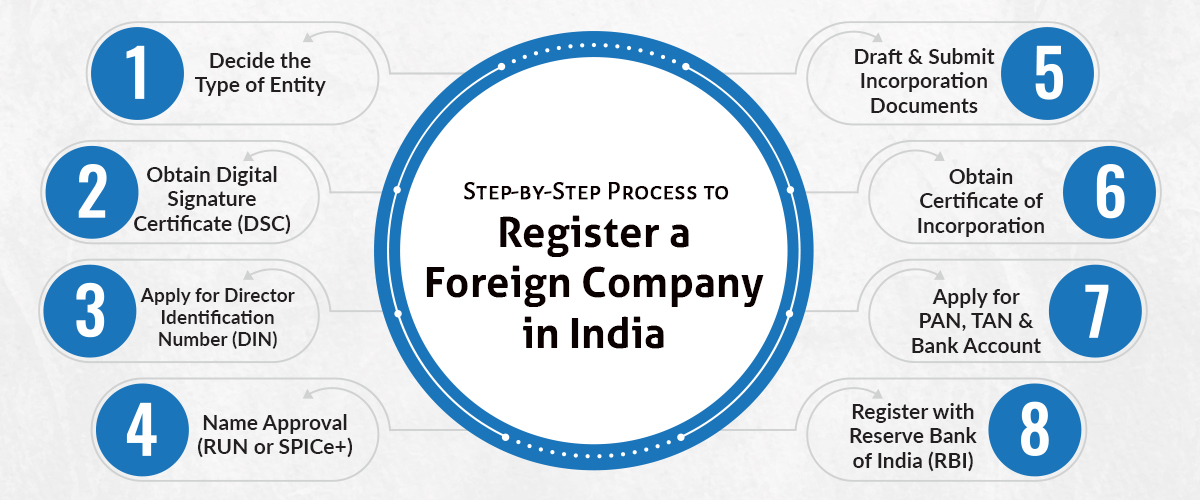
3. Step-by-Step Business Registration Process
| Step | Particulars |
|---|---|
| Step 1 | Selection of suitable entity structure |
| Step 2 | Digital Signature (DSC) for promoters |
| Step 3 | Name approval with MCA |
| Step 4 | Filing incorporation forms |
| Step 5 | PAN & TAN allotment |
| Step 6 | Certificate of Incorporation |
| Step 7 | Bank account opening |
| Step 8 | GST and other registrations (if applicable) |
4. Documents Required
For Indian Promoters
-
PAN card
-
Aadhaar card
-
Passport size photograph
-
Address proof
For Registered Office
-
Electricity bill / property tax receipt
-
Rent agreement or ownership proof
-
NOC from owner
For Foreign Promoters
-
Passport (apostilled or notarised)
-
Overseas address proof
-
Board resolution (if corporate shareholder)
5. Timeline for Registration
| Activity | Approximate Time |
|---|---|
| Name approval | 1–2 days |
| Incorporation | 3–5 days |
| PAN / TAN | Along with incorporation |
| Total time | 5–7 working days |
(Subject to documentation and government approval)
6. Post-Registration Mandatory Compliances
After incorporation, businesses must comply with statutory requirements:
-
Opening of company bank account
-
Capital infusion by shareholders
-
Filing INC-20A (Commencement of Business)
-
GST registration (if applicable)
-
Statutory audit appointment
-
Annual ROC filings
-
Income-tax return filing
Failure to comply may result in penalties or strike-off proceedings.
7. Tax Overview
| Particular | Applicability |
|---|---|
| Corporate tax | 22% + surcharge & cess |
| GST | Based on turnover / activity |
| TDS compliance | Mandatory |
| Transfer pricing | For foreign transactions |
8. Why Professional Assistance is Important
Business registration is not merely form filing. Incorrect structuring may lead to:
-
FEMA violations
-
Tax inefficiencies
-
Restricted business activities
-
Future compliance exposure
Professional advisory ensures legal validity, tax efficiency, and long-term compliance stability.
Conclusion
Registering a business in India is a strategic decision that requires careful planning of structure, taxation, and regulatory compliance. Whether you are an Indian entrepreneur or a foreign investor, choosing the right model at the beginning ensures smooth operations and sustainable growth. The cost of company registration in India varies based on the business structure, authorised capital, number of directors, and applicable government fees, and is determined after reviewing the specific requirements of the entity.